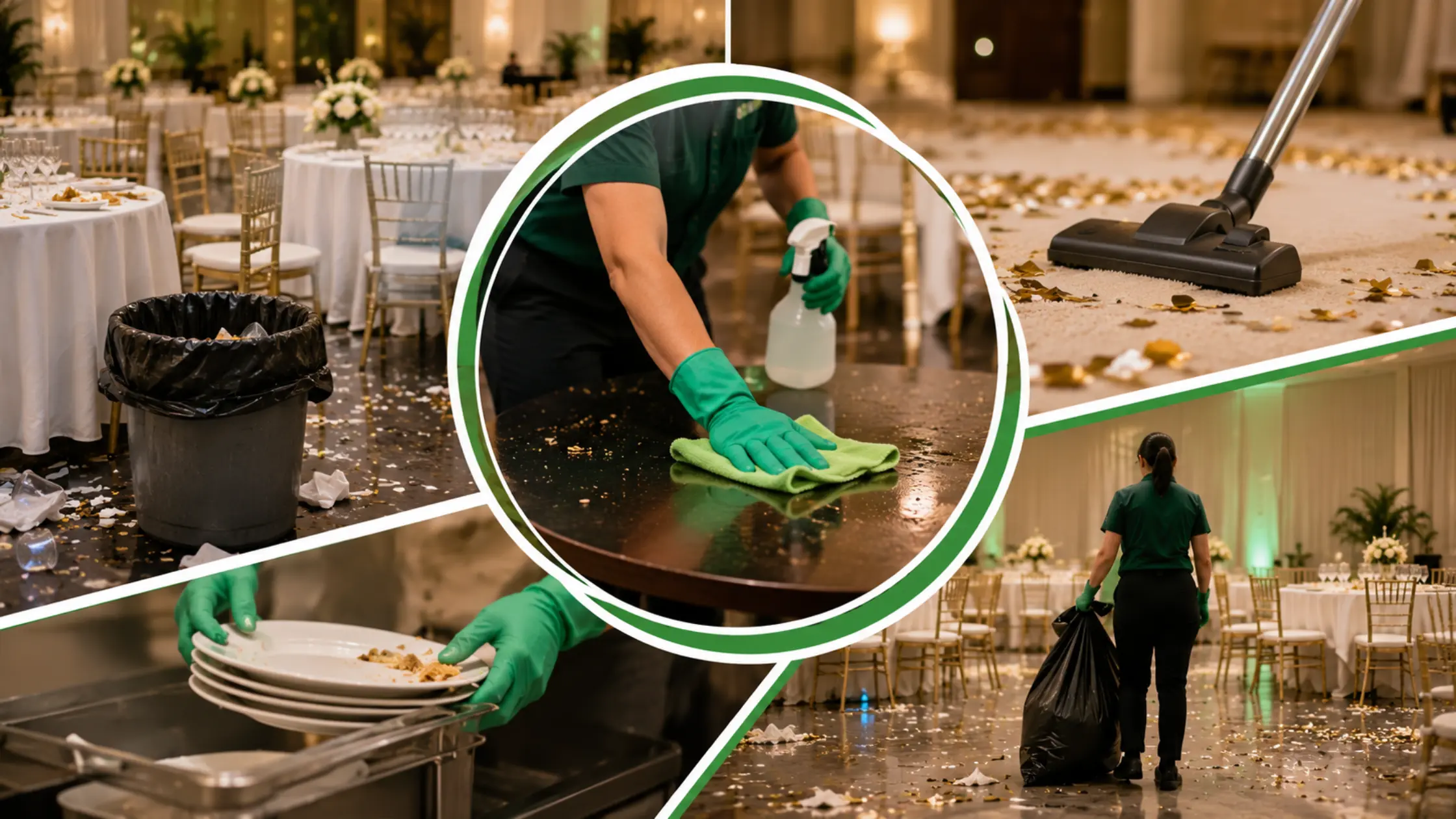
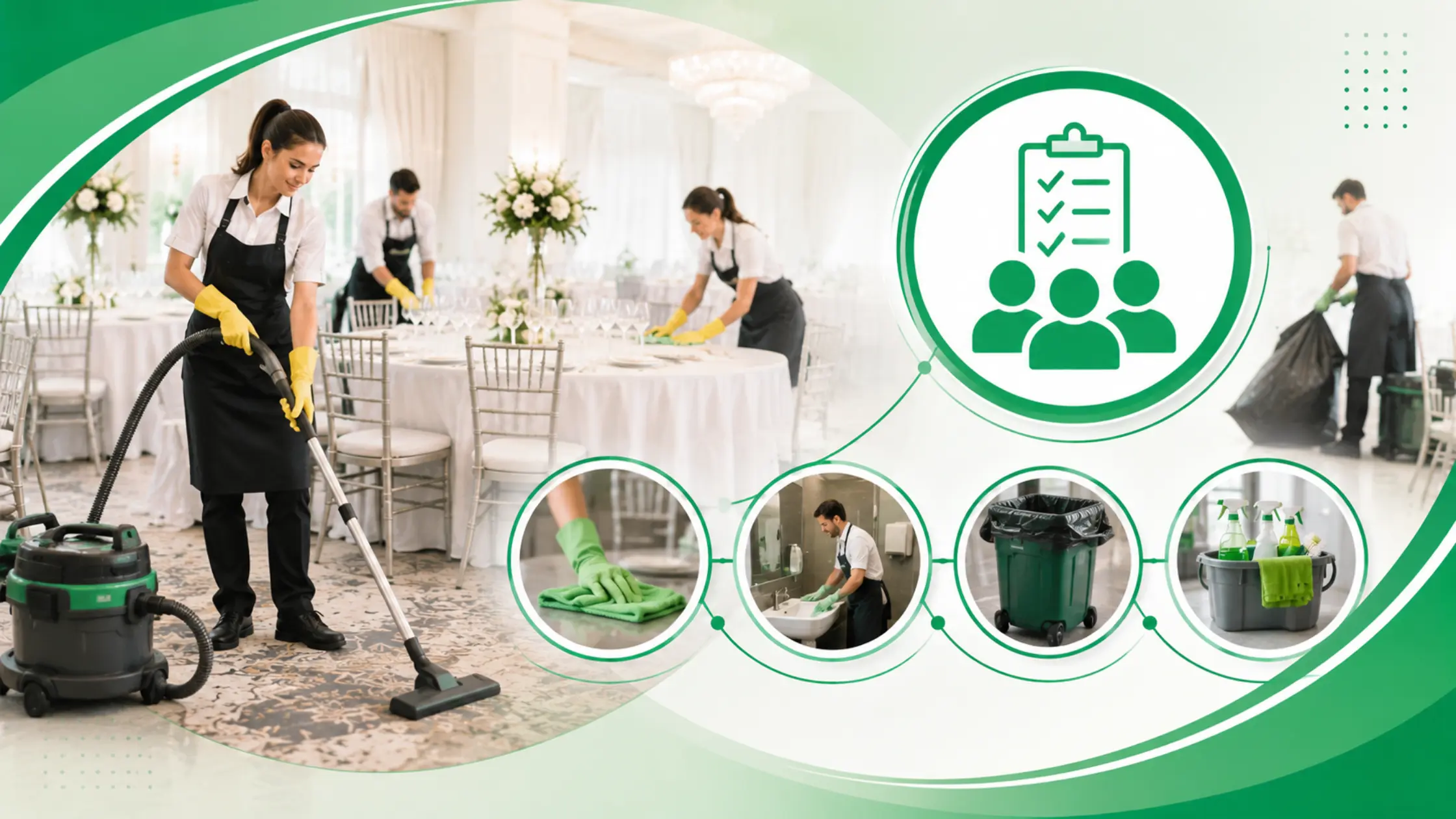
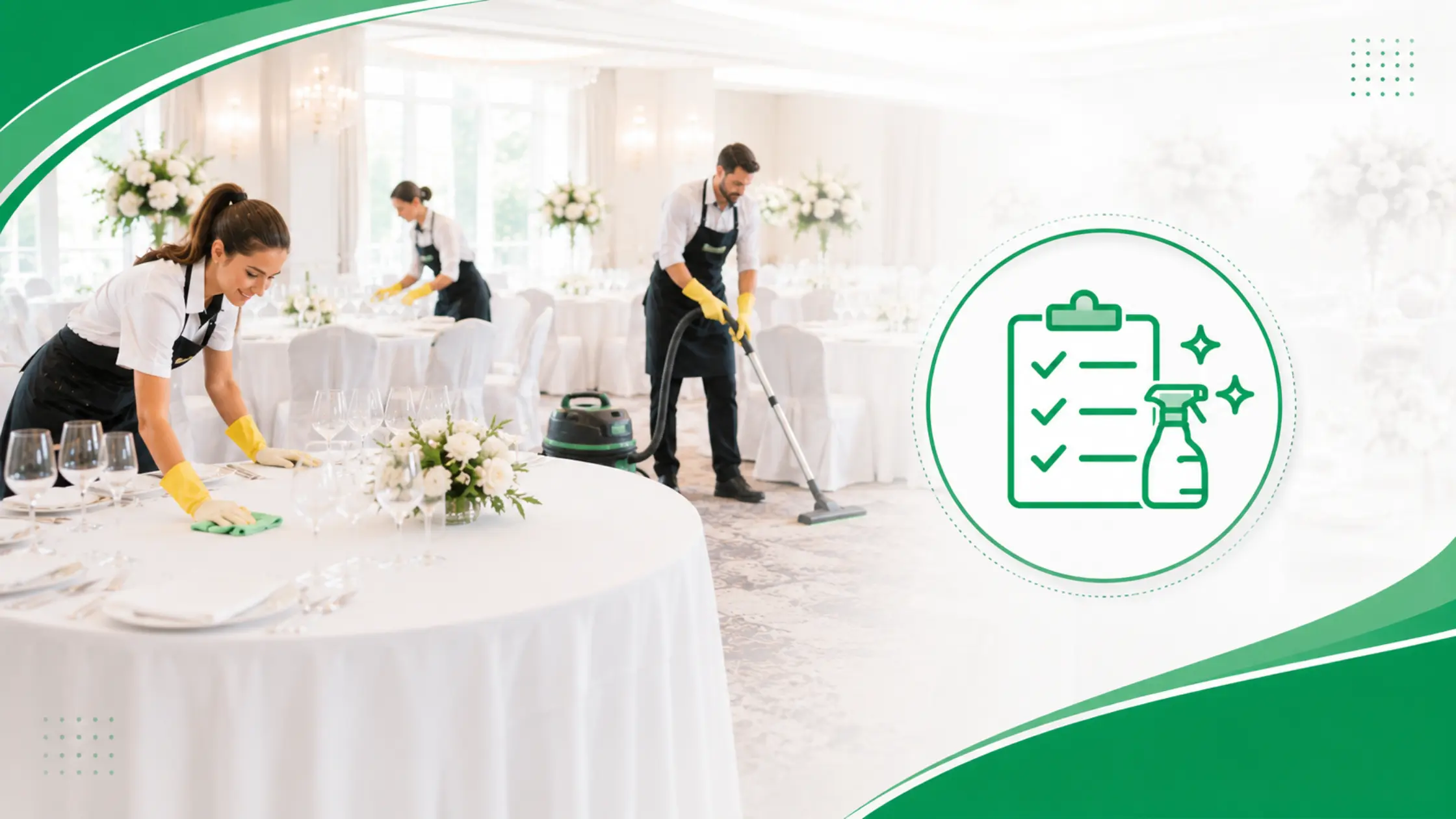
The industry baseline: 1 cleaner per 250 guests, with a minimum crew of 2 for any event. Post-event cleanup needs more hands than during-event coverage, usually double.
But the ratio is only a starting point. Scope of work moves the number more than guest count does.
Here’s how to calculate your actual crew size.
Quick Answer: Cleaners by Guest Count
| Guest Count | During Event | Post-Event Cleanup |
| Under 100 | 2 (minimum) | 2-3 |
| 100-250 | 2-3 | 3-4 |
| 250-500 | 3 | 4-5 |
| 500-1,000 | 3-4 | 5-6 |
| 1,000-2,500 | 4-8 | 8-10 |
| 2,500-5,000 | 8-12 | 10-14 |
| 5,000+ | 10-12 base, add 1-2 per additional 2,500 guests | Scales with venue size |
These numbers assume standard scope: trash management, litter patrol, and spill response. Add dedicated staff for restrooms, food service areas, or grounds, and the count climbs.
The Scope Rule: Guest count sets your baseline. Scope of work sets your final number.
The Base Ratio: 1 Cleaner Per 250 Guests
For general event porter work (emptying and relining trash cans, carting bags to the dumpster, picking up litter), one cleaner handles roughly 250 guests.
Two exceptions:
Never staff below 2 cleaners. One person can’t cover breaks, simultaneous spills, or trash runs to a distant dumpster. A solo cleaner at even a 100-guest event falls behind within the first hour.
The ratio compresses as events scale. At 5,000 guests you need 10-12 cleaners, not the 20 the flat ratio suggests, because crews gain efficiency with zones and supervision. Past that, add 1-2 cleaners per additional 2,500-5,000 guests.
Factors That Change Your Number
Food and Beverage Service
Food service is the single biggest multiplier. Plated dinners generate steady, predictable waste. Buffets and food trucks generate constant waste at unpredictable locations. Events with full catering need 20-30% more cleaning staff than dry events of the same size.
Alcohol pushes it further. Bars mean spills, dropped glasses, and heavier restroom traffic. Budget one additional cleaner per bar area at events over 500 guests.
Restrooms
Restrooms need dedicated staff once events cross certain thresholds:
- Indoor facilities: One dedicated attendant when guest count exceeds 200
- Portable restrooms: One cleaner per 10 stalls, the dependable industry rule for outdoor events
- Gendered facilities at large venues: One attendant per restroom
Restroom failures are the complaint guests remember. OSHA sanitation standards set minimum requirements for restroom availability and waste receptacle maintenance at public assemblies, so under-staffing facilities isn’t just a comfort issue at public events. It’s a compliance one.
Venue Layout
Distance kills efficiency. A cleaner who walks 200 yards to the dumpster completes half the trash runs of one who walks 50 feet. Sprawling outdoor sites, multi-floor venues, and venues with remote disposal points need 1-2 extra crew members just to cover travel time.
Private homes run opposite to intuition. Furniture, tight rooms, and personal belongings slow crews down. A 100-guest house party can demand as much cleaning labor as a 250-guest event hall.
Event Duration
Events over 5-6 hours require break rotations. You can’t run a 2-person crew for an 8-hour festival shift without coverage gaps. Add one floater per 4-5 workers for events running longer than 6 hours.
Guest Flow Pattern
3,000 guests spread across a full day is manageable. 3,000 guests arriving at once for a concert is not. Peak-load events (doors-open crowds, halftime rushes, meal services) need staffing for the surge, not the average.
Staffing by Event Phase
The three phases need different crews. Most hosts staff only the during-event phase and get buried at breakdown.
Pre-event (2-4 hours before doors): 2-4 cleaners. Baseline venue prep, restroom stocking, waste station positioning.
During the event: The 1:250 ratio with adjustments above.
Post-event: The largest crew by headcount. Bulk waste, floor restoration, and breakdown compress into a tight checkout window. Double your during-event crew as the starting point.
Our event cleaning checklist template breaks down the exact tasks in each phase.
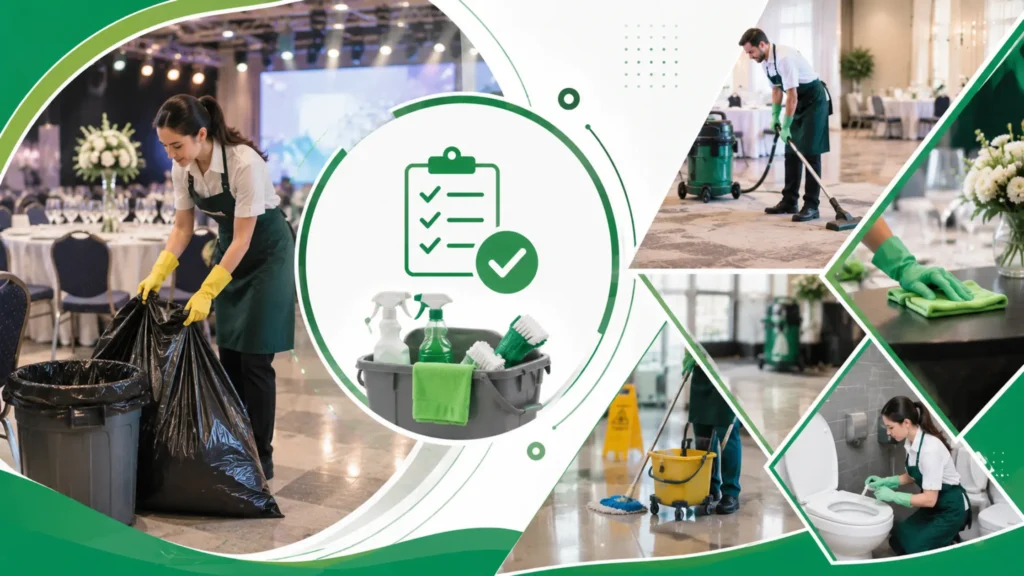
Real Example: 2,000-Guest Outdoor Festival
The setup: Community festival, food trucks, beer garden, portable restrooms (20 stalls), 8-hour run time.
The staffing math:
- Base ratio (2,000 ÷ 250): 8 cleaners
- Portable restrooms (20 stalls ÷ 10): 2 dedicated restroom staff
- Beer garden: 1 dedicated cleaner
- Site sprawl and dumpster distance: 1 additional
- 8-hour duration: 1 floater for break coverage
- Supervisor: 1 lead
Total: 14 crew members for during-event coverage, structured as two leads and twelve working cleaners across zones.
A flat 1:250 read would have suggested 8. The scope adjustments added 6 more. That gap is exactly where understaffed events fail: overflowing bins by hour three, restrooms out of supplies, and crews racking up overtime.
The Cost of Getting It Wrong
Understaffing costs more than the workers you saved. Overflowing trash photographed at your event lives on social media permanently. Venues bill overtime when cleanup misses checkout, often $100-$250 per hour. And crews pushed past capacity cut corners on the final walkthrough, which is where deposits die.
Overstaffing wastes money linearly. Understaffing compounds. When unsure, round up by one.
One more common mistake: counting on volunteers. Volunteer cleanup crews reliably evaporate once they see hired staff on site, or once the event ends and everyone wants to go home. If volunteers are your plan, cut their promised headcount in half before doing your math.
Wondering what the crew will cost? Our DFW event cleaning cost guide covers rates by event size. For timeline planning, see how long event cleanup takes.
Frequently Asked Questions
How many cleaners do I need for 100 guests?
Two during the event, the industry minimum for any gathering. Post-event cleanup needs 2-3 depending on venue size and checkout deadline.
How many cleaners do I need for a wedding of 150 guests?
Two during-event porters handling trash and spills, then a 3-4 person crew for post-event breakdown and broom-clean restoration. Add a dedicated restroom attendant if your guest count approaches 200.
What is the standard cleaner-to-guest ratio for events?
One cleaner per 250 guests for general porter work, with a 2-person minimum. The ratio tightens with food service, alcohol, outdoor sites, and portable restrooms.
How many cleaners do portable toilets need?
One cleaner per 10 portable stalls. They handle restocking, wipe-downs, and waste monitoring throughout the event.
Do I need more cleaners for outdoor events?
Yes, typically 20-30% more. Litter spreads across larger areas, dumpsters sit farther away, and portable restrooms need dedicated attention that indoor facilities don’t.
Is post-event cleanup staffed differently than during the event?
Yes. Post-event is the largest crew by headcount, usually double the during-event team, because bulk waste removal, floor restoration, and breakdown compress into a short checkout window.
The Bottom Line
Start at 1 cleaner per 250 guests. Never go below 2. Then adjust for what your event actually involves: food service, bars, portable restrooms, site sprawl, and duration. Post-event needs double the hands.
The ratio is arithmetic. The adjustments are judgment. If you’d rather hand off both, professional event cleaning services scope the crew to your event and staff all three phases.